
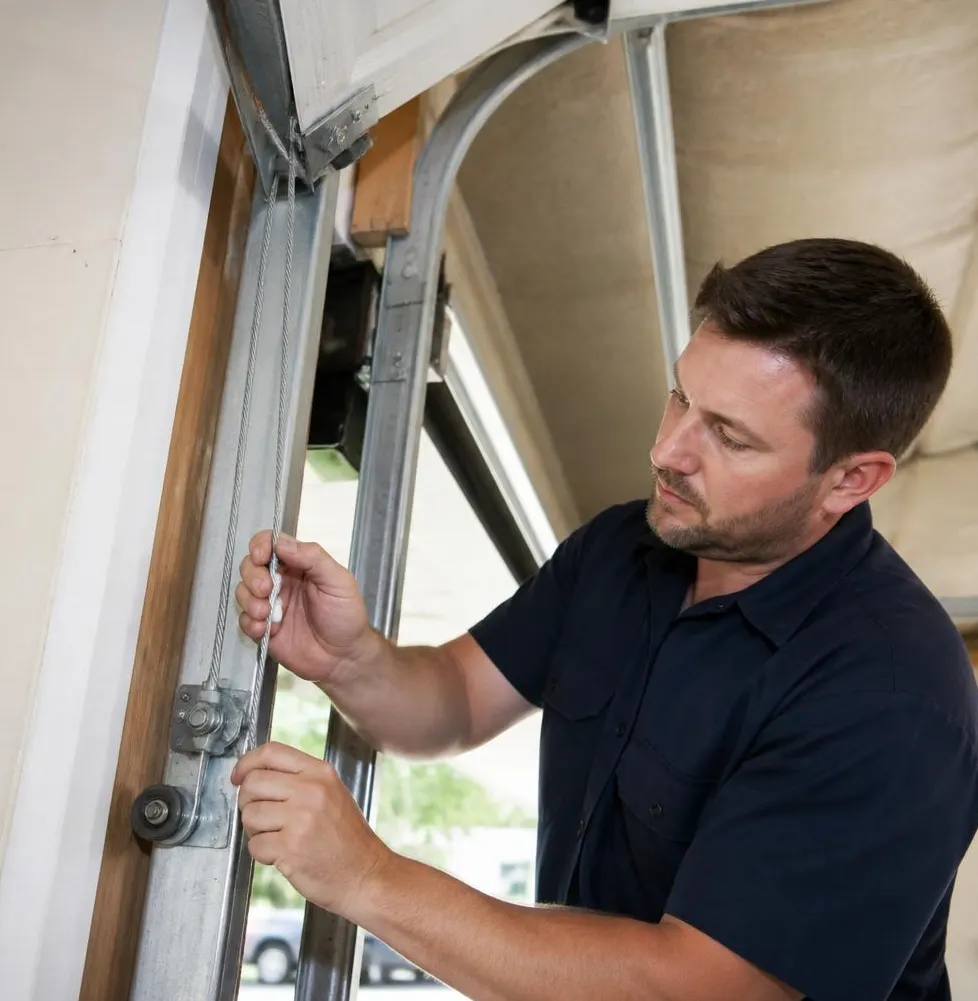
You're standing in the garage with your spouse, and one of you says, "We should get one of those heavy-duty commercial doors — like the ones at the marina or the self-storage place on the island." The other one says that's overkill for a house. Nobody wins, and the door still needs to open tomorrow morning. Here's what actually separates a commercial or warehouse overhead door from the one most homes have, so you can settle this without Googling in circles.
What Actually Makes a Door "Commercial"
It's not just size. Commercial and warehouse doors are built around how often they're used and what they're protecting.
- Cycle rating: A residential door is engineered for a handful of openings a day. A warehouse or loading dock door might open and close dozens of times in a shift, so the springs, rollers, and hinges are rated for tens of thousands more cycles.
- Steel gauge and construction: Commercial sections are typically thicker steel, sometimes with heavier reinforcement struts, because the doors are larger and take more daily abuse — forklifts, pallets, foot traffic.
- Opener horsepower and control systems: Commercial openers run on higher horsepower motors, often three-phase, with safety features like photo eyes and edge sensors tuned for constant industrial use, not a once-a-day residential routine.
- Door type: Many commercial buildings use rolling steel doors (curtain style, coiling up into a drum) instead of the sectional panel doors you see on houses. They save overhead space in a warehouse but don't suit a home's garage ceiling or aesthetic.
Why That Build Doesn't Transfer to a House
A commercial-grade door sounds like "more durable," and in a literal sense it is — but durability built for cycle count and industrial loads isn't the same as durability built for coastal wind and weather, which is what a Bradenton Beach home actually needs. Residential garage doors sold and installed in this area are already engineered to meet wind-load requirements for coastal Florida, which matters a lot more here than how many times a day the door opens. A commercial door dropped into a home garage usually means a mismatched opener, a door that's heavier than the track and header are built for, and a repair bill nobody budgeted for when a part fails and the installer has to source industrial components instead of standard residential ones.
Where a commercial-style door does make sense for a homeowner is a separate structure — a detached workshop, a boat or RV storage building, something getting opened and closed constantly for equipment rather than a car. In that case, a heavier-duty door and opener earns its keep. For the main house garage, it almost never does.
Maintenance Looks Different Too
Commercial doors get serviced on a schedule tied to cycle count — a property manager isn't waiting for a sound or a jam, they're replacing rollers and checking springs on a calendar because downtime costs money. Residential maintenance is more about weather than wear:
- Checking torsion springs for rust pitting from salt air, since corroded coils fail suddenly and without much warning.
- Inspecting weatherstripping and seals before hurricane season's wind-driven rain finds a gap.
- Watching for panel swelling or sticking from humidity, especially on doors with wood composite or older steel sections near the coast.
- Lubricating hinges, rollers, and tracks more often than an inland home would need, because salt air accelerates corrosion on hardware that would otherwise last years longer.
A commercial maintenance schedule built around heavy daily use won't catch these coastal issues, and a residential schedule that ignores the coast won't catch rust before it becomes a spring failure.
When to Call Precision Garage Door of Bradenton Beach
If your argument started because the door is sticking, sagging, or sounding rough and someone jumped to "maybe we need a whole different kind of door," start simpler. Our Preventive Maintenance & Tune-Up service checks springs, hardware, and weatherstripping for the kind of salt-air wear that's specific to this part of Florida, and tells you honestly whether you need a repair or a replacement — no upsizing to commercial equipment your garage was never built for. If the door's come off track or a panel's been damaged by storm debris, our Off Track Door Repair and Garage Door Panel Replacement services get it back to proper working order without reinventing the whole system.
Call Precision Garage Door of Bradenton Beach and we'll take a look, explain exactly what's going on, and fix it right — no guessing, no overbuilt solutions to a residential problem.