
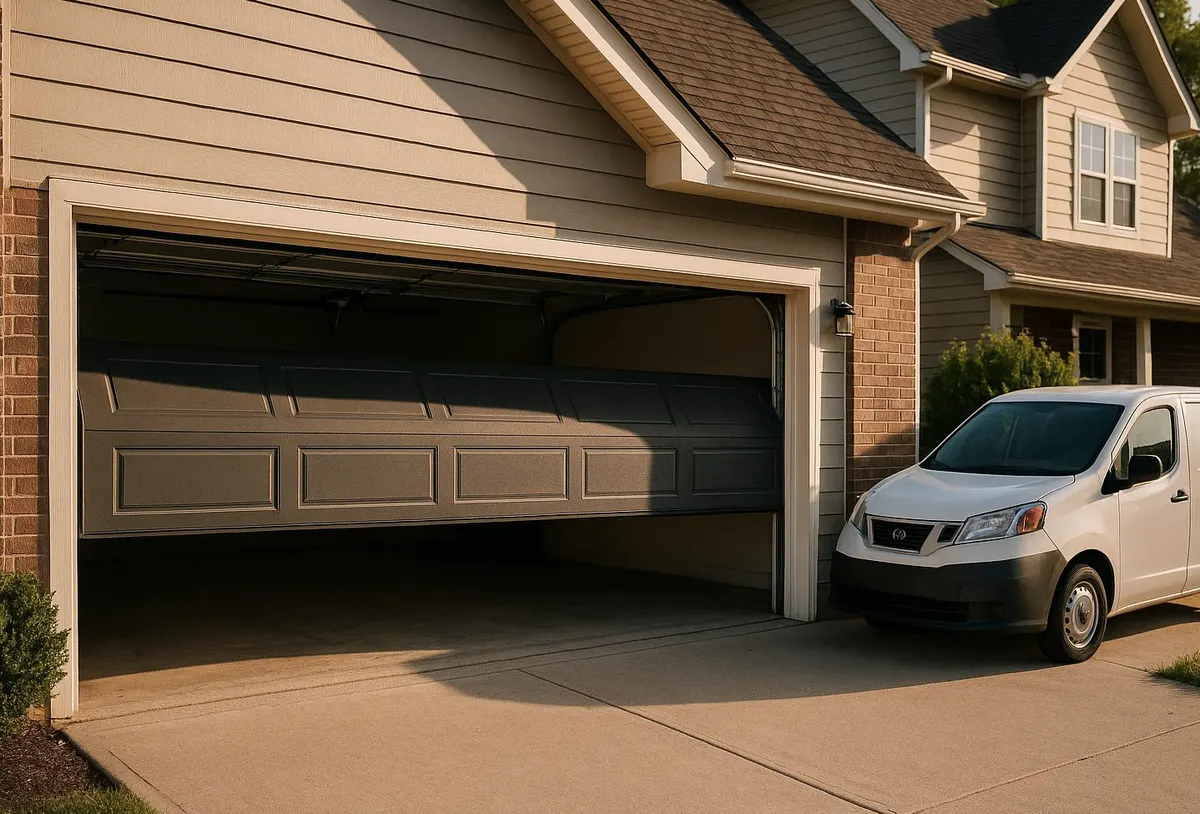
Rule of thumb: lubricate the moving metal parts of your garage door every three to four months with a silicone or lithium-based spray, and never the parts that aren't supposed to move. The exceptions matter here on the coast — if you're within a mile or two of the water, salt air speeds up corrosion enough that some homeowners go on a bimonthly schedule for hinges and tracks. And if your door saw a lot of action during a stormy stretch (lots of opening and closing before a squall, or sitting shut through days of humidity), it's worth an extra lubrication pass outside your normal routine.
Tools and Products You'll Need
- A garage-door-specific lithium grease or silicone spray lubricant (sold at most hardware stores, often labeled for garage doors)
- A clean, dry microfiber cloth or shop rag
- A soft-bristle brush (an old toothbrush works) for dirt in hinge joints
- Household vacuum or dry cloth for track cleaning
- Step stool or ladder
- Work gloves
Step-by-Step: Lubricating Your Garage Door
- Disengage the opener. Pull the emergency release cord so the door is in manual mode. This keeps the opener from engaging while you're working around moving parts.
- Open the door most of the way and inspect everything first. Look at the hinges, rollers, tracks, and springs for rust, cracked metal, or visible wear. This is also when you'll spot warped panels or swollen wood from humidity — note those for later, don't try to fix them with lubricant.
- Wipe down the tracks. Tracks should be clean and dry, not lubricated. Salt air and afternoon humidity leave a fine grit on the metal that acts like sandpaper on the rollers if you don't clear it off first. A dry cloth or vacuum attachment handles this.
- Lubricate the hinges. Spray a small amount directly into each hinge joint where metal pieces pivot against each other. Work the door up and down a couple of times by hand (with the opener still disengaged) to let the lubricant settle into the joint.
- Lubricate the roller stems, not the wheels. If you have steel rollers with ball bearings, apply lubricant to the bearing area, not the track-facing surface of the wheel. Nylon rollers (increasingly common because they handle humidity better than steel) usually don't need lubrication at all — check your manufacturer's instructions.
- Lightly coat the springs. A thin layer of lubricant on the torsion spring coils reduces friction and slows rust, which is a real concern with salt air in the mix. Don't saturate it — a light misting is enough.
- Lubricate the opener's drive mechanism. If you have a chain-drive opener, apply lubricant along the chain. For a screw-drive opener, use the specific grease recommended in the owner's manual (regular lithium spray can be too thin for this application).
- Wipe off excess. Any lubricant left sitting on the surface just attracts dust and grit, which does more harm than good in a humid climate. A quick pass with a dry rag after each step keeps things clean.
- Reconnect the opener and cycle the door three or four times. Watch and listen. The door should move smoothly and quietly. If you still hear grinding or catching after lubrication, that's a sign the problem isn't friction — it's mechanical.
Products to Avoid
- WD-40 as a long-term lubricant. It's a solvent and water-displacer, not a lubricant. It will strip old grease away and evaporate quickly, leaving parts drier than before within a few weeks — not ideal when you're trying to stay ahead of salt-air corrosion.
- Household oils (3-in-1, motor oil, cooking oil). These are too thin, attract dust and pollen, and tend to drip onto driveways and door panels.
- Heavy grease on tracks. Grease on the track surface collects grit and debris, which then grinds against the rollers every time the door cycles.
- Any lubricant on the garage door's weatherstripping or rubber seals. These should be wiped clean with mild soap and water, not oiled — lubricant actually degrades rubber over time.
What's Safe for Homeowners vs. What Needs a Technician
Lubricating hinges, rollers, tracks (cleaning only), and the opener chain or screw rail is reasonable DIY work for most homeowners with basic tools and a step stool. Where you should stop and call a professional instead:
- Torsion springs that show gaps, rust-through, or visible stretching. These are under extreme tension and are not a lubrication job — they're a repair or replacement job, and attempting to adjust or remove one yourself is genuinely dangerous.
- Frayed or rusted cables. Lubricant won't fix a cable that's losing strands. If you see fraying near the bottom bracket or drum, that's a sign of a cable close to failure.
- Doors that are off track or binding even after lubrication. This usually points to bent track, a misaligned roller, or a structural issue with the door itself, not friction.
- Anything involving disassembly of the opener motor or high-lift conversions. Beyond basic external lubrication, opener internals are best left to someone trained on the specific model.
When to Call Precision Garage Door of Bradenton Beach
If you've gone through the lubrication routine and the door still grinds, sticks, or sags unevenly, it's likely past what lubricant can solve. Our technicians handle Garage Door Spring Repair and Garage Door Cable Repair regularly for homes along the coast, where salt exposure wears out springs and hardware faster than it does further inland. We'll check the torsion system, cables, and track alignment, and we carry wind-rated replacement parts suited to hurricane-season requirements if your hardware needs upgrading rather than just servicing.
If your garage door needs more than a bottle of lubricant can fix, give Precision Garage Door of Bradenton Beach a call — we serve homes and businesses throughout Bradenton Beach, Anna Maria, Holmes Beach, and the surrounding Manatee County area, and we're ready to get your door moving smoothly again.